


Hinduism ke paas sacred literature ka ek bahut vast aur diverse tradition hai.
Hinduism kisi ek single holy book par based tradition nahi hai.
Iske sacred knowledge ka development kai layers mein hua hai, jisme shamil hain:
- Vedic Knowledge
- Philosophy
- Ritual Traditions
- Epics
- Devotional Literature
- Dharma Texts
- Stories
- Spiritual Teachings
Hindu scriptures ko samajhne ke sabse important traditional frameworks mein se ek hai:
Shruti
aur
Smriti
Simple words mein:
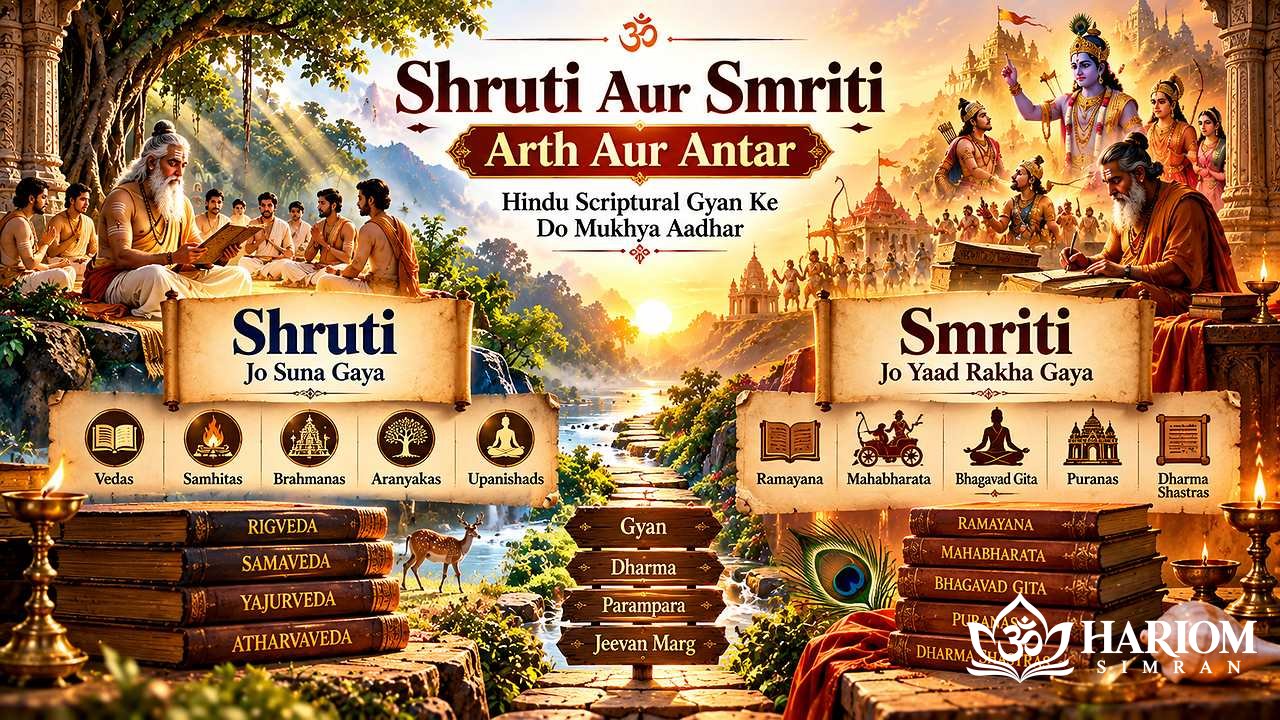
Shruti ka meaning hai — “Jo Suna Gaya.”
Smriti ka meaning hai — “Jo Yaad Rakha Gaya.”
Lekin in dono ka difference sirf translation tak limited nahi hai.
Shruti traditionally Vedic revelation ko represent karti hai, jabki Smriti broad remembered, transmitted aur interpreted tradition ko represent karti hai.
Agar aap Hindu scriptures ko systematically samajhna chahte hain, to Hindu Scriptures section se start kar sakte hain.
Shruti Kya Hai?
Sanskrit word Shruti ka meaning hai:
“Jo Suna Gaya.”
Traditional Hindu understanding mein Shruti primarily Vedas aur unse connected Vedic literature ko refer karti hai.
Shruti ko sacred knowledge mana gaya jo ancient Rishis ne hear ya directly perceive kiya.
Is traditional understanding mein Rishis ko Vedic Mantras ke modern sense mein authors nahi, balki seers mana jata hai.
Yahi reason hai ki Shruti ko Hindu sacred literature mein special foundational position milti hai.
Kaun Se Scriptures Shruti Mein Aate Hain?
Shruti tradition ka foundation chaar Vedas hain:
- Rigveda
- Samaveda
- Yajurveda
- Atharvaveda
Har Veda ke saath different textual layers develop hui.
Commonly ye layers include karti hain:
- Samhitas
- Brahmanas
- Aranyakas
- Upanishads
Isliye Shruti sirf Mantras ka collection nahi hai.
Ye ritual explanation, symbolic interpretation, contemplation aur philosophy ko bhi include karti hai.
Chaar Vedas
Chaar Vedas Shruti tradition ka heart hain.
Rigveda
Rigveda ancient hymns ka collection hai.
Iske hymns different Vedic deities aur cosmic principles ko address karte hain.
Important themes include:
- Creation
- Prayer
- Sacred Order
- Divine Powers
- Human Aspiration
- Ritual
- Cosmic Mystery
Rigveda Vedic tradition ke sabse foundational texts mein se ek hai.
Samaveda
Samaveda specially sacred chanting aur musical recitation se connected hai.
Iske kai verses Rigvedic tradition se liye gaye hain, lekin unhe liturgical singing ke liye arrange kiya gaya.
Samaveda ki importance sirf words mein nahi hai.
Ismein ye bhi important hai ki sacred verses kis tarah recite aur sing kiye jate hain.
Yajurveda
Yajurveda Vedic rituals aur ceremonies se closely connected hai.
Ismein ritual formulas, instructions aur Mantras milte hain.
Yajurveda ke different recensions Vedic tradition ke andar important variations preserve karte hain.
Atharvaveda
Atharvaveda human life ke kai dimensions ko cover karta hai.
Ismein mil sakte hain:
- Prayers
- Household Concerns
- Healing Traditions
- Protection
- Royal Themes
- Spiritual Reflection
- Philosophical Ideas
Atharvaveda dikhata hai ki Vedic literature sirf ceremonial ritual tak limited nahi tha.
Ye everyday human life se bhi deeply connected tha.
Vedic Literature Ki Chaar Major Layers
Shruti ko samajhne ka ek useful way hai Vedic literature ki chaar major layers ko samajhna.
1. Samhitas
Samhitas Vedic hymns, Mantras, chants aur sacred formulas ke collections hain.
Ye har Veda ka core textual layer represent karti hain.
2. Brahmanas
Brahmanas Vedic rituals, ceremonies aur sacrifices ke meaning ko explain karti hain.
Ye ritual practices ke symbolic aur theological dimensions ko samajhne mein help karti hain.
3. Aranyakas
Aranyakas often ritual se deeper contemplation ki taraf transition dikhati hain.
Inhe kabhi-kabhi forest traditions se associate kiya jata hai.
Ye external ritual aur philosophical reflection ke beech ek bridge ki tarah samjhi ja sakti hain.
4. Upanishads
Upanishads Hindu philosophy ke sabse profound discussions ko preserve karti hain.
Ye questions explore karti hain:
Self Kya Hai?
Ultimate Reality Kya Hai?
Brahman Kya Hai?
Atman Kya Hai?
Moksha Kya Hai?
Individual Aur Ultimate Reality Ka Relationship Kya Hai?
In questions ne later Vedanta aur Hindu philosophy ko deeply influence kiya.
Aap in traditions ko Hindu Scriptures ke through explore kar sakte hain.
Shruti Important Kyun Hai?
Shruti traditionally Hindu sacred knowledge ka foundational Vedic source mani gayi hai.
Ye preserve karti hai:
- Ancient Vedic Mantras
- Ritual Traditions
- Sacred Chants
- Cosmological Ideas
- Philosophical Inquiry
- Dharma Se Related Concepts
- Meditative Knowledge
- Atman Aur Brahman Ki Teachings
Many later Hindu traditions ne apni philosophy, ritual aur theology ko Vedic tradition ke saath dialogue mein develop kiya.
Lekin daily religious life mein har Hindu Shruti ko same level par directly study nahi karta.
Bahut se devotees Bhagavad Gita, Ramayana, Puranas ya devotional literature ke through spiritual knowledge receive karte hain.
Isliye ye distinction important hai:
Foundational Scriptural Authority
aur
Daily Religious Accessibility
dono same cheez nahi hain.
Smriti Kya Hai?
Sanskrit word Smriti ka meaning hai:
“Jo Yaad Rakha Gaya.”
Smriti Hindu literature ki ek bahut broad category hai.
Ye remembered, transmitted, interpreted aur composed traditions ko include karti hai.
Shruti ke comparison mein Smriti human sages, teachers, compilers aur authorship ke saath zyada directly associated hai.
Smriti tradition bahut diverse hai.
Ismein Hinduism ke sabse widely read aur loved texts bhi shamil hain.
Kaun Se Hindu Texts Smriti Mein Aate Hain?
Smriti category bahut wide hai.
Important examples include:
- Ramayana
- Mahabharata
- Bhagavad Gita
- Puranas
- Dharma Shastras
- Smriti Texts
- Kuch Sutra Traditions
- Later Spiritual Aur Devotional Literature
Different traditions aur scholarly systems kuch texts ko more specific categories mein classify kar sakte hain.
Isliye broad distinction ko simple tarah samjhein:
Shruti — Vedic Revelation
Smriti — Remembered Aur Transmitted Tradition
Kya Bhagavad Gita Shruti Hai Ya Smriti?
Bhagavad Gita generally Smriti tradition mein classify ki jati hai, kyunki ye Mahabharata ka part hai.
Lekin iska ye meaning bilkul nahi hai ki Bhagavad Gita less important hai.
Bhagavad Gita Hinduism ke sabse influential spiritual texts mein se ek hai.
Ye explore karti hai:
- Dharma
- Karma
- Bhakti
- Jnana
- Yoga
- Atman
- Action
- Detachment
- Divine Reality
- Moksha
Is example se ek important point clear hota hai:
Smriti ka meaning “unimportant” nahi hai.
Ye simply sacred literature ki ek different traditional category hai.
Kya Ramayana Shruti Hai Ya Smriti?
Ramayana broadly Smriti tradition mein aati hai.
Traditionally Maharishi Valmiki se associated Ramayana Shri Rama ki sacred story ko preserve karti hai.
Ye themes explore karti hai:
- Dharma
- Duty
- Family
- Leadership
- Devotion
- Sacrifice
- Loyalty
- Courage
- Righteous Conduct
Ramayana ne generations tak Hindu religious aur cultural life ko influence kiya hai.
Iska influence milta hai:
- Temple Traditions
- Festivals
- Bhajans
- Drama
- Storytelling
- Family Teachings
- Regional Literature
- Devotional Practice
Ye dikhata hai ki Smriti texts practical Hindu life ko deeply shape kar sakte hain.
Kya Mahabharata Shruti Hai Ya Smriti?
Mahabharata bhi generally Smriti tradition ke andar samjha jata hai.
Traditionally Maharishi Vyasa se associated Mahabharata duniya ke sabse great epic traditions mein se ek hai.
Ye explore karta hai:
- Dharma
- Justice
- Leadership
- Family Conflict
- Duty
- Power
- War
- Loyalty
- Human Weakness
- Spiritual Wisdom
Mahabharata ka ek important feature ye hai ki ye Dharma ko hamesha simple nahi dikhata.
Kai situations mein responsibilities conflict karti hain.
Isi complexity ke through text deep ethical questions explore karta hai.
Mahabharata ka sabse famous spiritual dialogue Bhagavad Gita hai.
Traditional sacred narratives ke liye Hindu Stories section explore karein.
Kya Puranas Smriti Hain?
Haan.
Puranas generally broader Smriti tradition ka part maane jate hain.
Puranas Hindu religious knowledge ka bahut wide range preserve karte hain.
Inmein include ho sakta hai:
- Stories of Deities
- Cosmology
- Genealogies
- Sacred Geography
- Pilgrimage Traditions
- Creation Narratives
- Dharma
- Bhakti
- Temple Traditions
- Spiritual Teachings
Puranic literature especially stories ke through sacred teachings communicate karne mein important raha hai.
Divine traditions ko explore karne ke liye Deities section visit karein.
Shruti Aur Smriti Mein Main Difference Kya Hai?
Simple distinction ye hai:
Shruti
Jo Suna Gaya
Traditionally Vedic revelation se associated.
Smriti
Jo Yaad Rakha Gaya
Remembered, transmitted aur interpreted sacred tradition se associated.
Neeche ek simple comparison diya gaya hai:
| Aspect | Shruti | Smriti |
|---|---|---|
| Meaning | Jo Suna Gaya | Jo Yaad Rakha Gaya |
| Core Tradition | Vedic Revelation | Remembered Aur Transmitted Tradition |
| Major Examples | Vedas Aur Vedic Corpus | Ramayana, Mahabharata, Puranas, Dharma Texts |
| Traditional Status | Foundational Vedic Authority | Interpretive Aur Derived Tradition |
| Style | Hymns, Ritual, Philosophy, Contemplation | Epics, Stories, Dharma, Philosophy, Devotion |
| Transmission | Strong Oral Preservation | Oral Aur Written Transmission |
| Practical Role | Foundational Sacred Knowledge | Teachings Ko Explain, Apply Aur Preserve Karna |
Ye table useful overview deta hai, lekin Hindu textual tradition ko rigid modern hierarchy mein reduce nahi karna chahiye.
Kya Shruti Smriti Se Zyada Important Hai?
Traditional interpretation ke kai systems mein Shruti ko higher foundational authority di gayi hai.
Lekin ye kehna:
“Shruti important hai aur Smriti less important hai”
misleading hoga.
Smriti texts ne daily Hindu life ko deeply shape kiya hai.
Many devotees ke liye:
Bhagavad Gita
Ramayana
Mahabharata
Puranas
direct Vedic study se zyada familiar ho sakte hain.
Isliye dono statements ek saath true ho sakte hain:
Shruti foundational scriptural authority hold karti hai.
Aur:
Smriti enormous spiritual, devotional, cultural aur practical influence rakhti hai.
Shruti Aur Smriti Kaise Connected Hain?
Shruti aur Smriti ko competing traditions ke roop mein samajhna zaroori nahi hai.
Smriti often Hindu tradition ke foundational concepts ko explain, interpret aur narrate karti hai.
Vedic tradition foundational concepts provide karti hai.
Later sacred literature un concepts ko explore karta hai through:
- Stories
- Dialogues
- Philosophy
- Ethics
- Devotional Traditions
- Social Teachings
- Spiritual Practice
Is tarah Hindu sacred knowledge isolated books ka collection nahi, balki ek interconnected tradition ke roop mein develop hua.
Shruti, Smriti Aur Dharma
Dharma ka concept Hindu sacred literature ke different layers mein milta hai.
Shruti mein sacred order, ritual aur right conduct se related early Vedic foundations milti hain.
Smriti literature Dharma ko practical aur narrative contexts mein develop karti hai.
For example:
Ramayana Dharma ko Shri Rama aur other characters ke through explore karti hai.
Mahabharata Dharma ko difficult moral conflicts ke through explore karta hai.
Bhagavad Gita Dharma ko responsibility, action, spiritual knowledge aur liberation ke context mein explain karti hai.
Dharma texts ethical, ritual aur social traditions ko historical context ke andar discuss karte hain.
Dharma ko detail mein samajhne ke liye Dharma guide explore karein.
Shruti, Smriti Aur Oral Tradition
Hindu sacred history ka ek remarkable feature hai oral transmission.
Generations tak Vedic knowledge disciplined memorization aur recitation ke through preserve kiya gaya.
Special attention diya jata tha:
- Pronunciation
- Accent
- Sound
- Sequence
- Rhythm
- Recitation Pattern
Different Vedic recitation methods textual accuracy preserve karne ke liye develop hue.
Iska meaning ye hai ki Hindu sacred knowledge sirf books ke through preserve nahi hua.
Ye preserve hua:
Teacher Aur Student
Guru Aur Shishya
Listening
Memorization
Recitation
aur
Living Tradition
ke through.
Shruti Mein Sound Important Kyun Hai?
Shruti word khud hearing ko emphasize karta hai.
Vedic tradition mein sacred sound ka special significance hai.
Vedic Mantra ko sirf written information ke roop mein treat nahi kiya jata.
Uski:
Pronunciation
Rhythm
Accent
aur
Traditional Recitation
important ho sakti hai.
Isi wajah se Vedic education historically listening aur accurate repetition par strong focus rakhti thi.
Sacred sound ka importance Hindu spiritual traditions mein aaj bhi continue karta hai.
Aap related traditions Mantras section mein explore kar sakte hain.
Kya Smriti Time Ke Saath Change Hoti Hai?
Smriti remembered aur interpreted tradition se closely connected hai.
Isliye historical context especially important ho jata hai.
Different Smriti texts different times aur social circumstances mein develop hue.
Ye topics discuss kar sakte hain:
- Dharma
- Family
- Society
- Law
- Leadership
- Ritual
- Devotion
- Ethics
Hindu history kai centuries aur regions mein spread hai.
Isliye Smriti texts ki application aur interpretation bhi different rahi hai.
Ye especially Dharma Shastra aur historical social texts ko read karte waqt important hai.
Kisi ek historical text ki statement ko automatically har Hindu ke liye universal rule samajhna sahi nahi hoga.
HariOmSimran aise texts ko historical aur philosophical context ke saath explain karega.
Kya Sabhi Smriti Texts Ki Same Authority Hai?
Nahi.
Smriti ek bahut broad category hai.
Different traditions different texts ko different importance deti hain.
For example:
Ek Vaishnava community certain Vaishnava texts ko strongly emphasize kar sakti hai.
Ek Shaiva tradition Shaiva scriptures aur commentarial traditions par focus kar sakti hai.
Ek Shakta tradition Devi-centered literature ko central importance de sakti hai.
Different Vedanta schools Bhagavad Gita aur Upanishads ko different philosophical lenses se interpret karte hain.
Regional Hindu traditions bhi Sanskrit aur regional languages ke sacred literature ko special importance de sakti hain.
Isliye har Smriti text ki ek universal ranking nahi hai jo sab Hindu traditions par apply ho.
Shruti, Smriti Aur Hindu Diversity
Shruti aur Smriti ko samajhne se Hinduism ki scriptural diversity bhi clear hoti hai.
Hindu sacred literature include karti hai:
- Vedic Hymns
- Philosophical Dialogues
- Epic Narratives
- Devotional Stories
- Temple Traditions
- Dharma Literature
- Yoga Texts
- Philosophical Sutras
- Bhakti Poetry
Different traditions in forms ko different ways mein use karti hain.
Diversity ka meaning structure ki absence nahi hai.
Shruti aur Smriti Hindu scriptures ko samajhne ka ek important traditional framework provide karti hain.
Kya Hinduism Mein Ek Hi Holy Book Hai?
Nahi.
Hinduism mein koi ek single book aisi nahi hai jo sab Hindu traditions ke liye only holy book ho.
Ye Hinduism ki major characteristics mein se ek hai.
Hindu sacred knowledge ek large family of texts ke through develop hua.
Vedas Shruti ke roop mein foundational importance rakhte hain.
Saath hi:
Bhagavad Gita
Ramayana
Mahabharata
Puranas
Agamas
Sutras
aur
Devotional Texts
ne Hindu thought aur practice ko deeply shape kiya hai.
Isi wajah se question:
“Hindu holy book kaun si hai?”
ka answer usually deeper explanation demand karta hai.
Better question hai:
“Major Hindu scriptures kaun se hain aur unka role kya hai?”
HariOmSimran ka Hindu Scriptures section isi approach ko follow karta hai.
Shruti Aur Smriti Hindu Philosophy Mein
Shruti aur Smriti ka distinction philosophical interpretation mein especially important raha hai.
Different Hindu schools ne scriptural authority ko interpret karne ke apne methods develop kiye.
Vedanta traditions, for example, important texts ko deeply study karti hain, including:
Upanishads
Bhagavad Gita
Brahma Sutras
Lekin different Vedanta schools in texts ko exactly same way interpret nahi karti.
Advaita, Vishishtadvaita, Dvaita aur other traditions ke philosophical conclusions different ho sakte hain.
Ye humein remind karta hai:
Same scripture hona same interpretation hone ke equal nahi hai.
Shruti Aur Upanishads
Upanishads especially important hain kyunki ye Vedic tradition ka philosophical aur contemplative dimension represent karti hain.
Ye questions explore karti hain:
Reality Kya Hai?
Consciousness Kya Hai?
Atman Kya Hai?
Brahman Kya Hai?
Ignorance Remove Hone Par Kya Hota Hai?
Spiritual Liberation Kya Hai?
In questions ne centuries tak Hindu philosophy ko influence kiya hai.
Future HariOmSimran articles mein principal Upanishads ko individually detail mein explain kiya jayega.
Smriti Aur Bhagavad Gita
Bhagavad Gita ek excellent example hai ki kaise Smriti text extraordinary spiritual authority achieve kar sakti hai.
Mahabharata ke andar set Gita Shri Krishna aur Arjuna ke dialogue ke form mein hai.
Ye address karti hai:
- Dharma
- Karma
- Bhakti
- Knowledge
- Meditation
- Atman
- Divine Reality
- Moksha
Different Hindu philosophical traditions ne Gita ko different ways mein interpret kiya.
Commentators philosophical details par disagree kar sakte hain, lekin Gita ko deeply important spiritual text ke roop mein respect karte hain.
Smriti Aur Sacred Stories
Smriti literature spiritual wisdom ko stories ke through communicate karne mein bhi bahut important hai.
Stories complex ideas ko easier to understand aur easier to remember banati hain.
Sacred narratives themes explore kar sakti hain:
- Dharma
- Bhakti
- Courage
- Compassion
- Sacrifice
- Ego
- Justice
- Devotion
- Spiritual Transformation
Isi wajah se stories Hindu knowledge ko generations tak transmit karne ka powerful medium rahi hain.
Traditional narratives ke liye Hindu Stories explore karein.
Daily Hindu Life Mein Shruti Aur Smriti
Daily religious life mein most people har practice ko Shruti ya Smriti ke label se classify nahi karte.
Ye categories scriptures ko academically aur traditionally samajhne mein especially useful hain.
Ek Hindu family daily life mein different traditions ko combine kar sakti hai.
For example:
Vedic Mantra Recite Karna
Bhagavad Gita Padhna
Ramayana Sunna
Puja Karna
Temple Visit Karna
Diwali Celebrate Karna
Bhajans Gana
Guru Ya Spiritual Teacher Ki Teaching Sunna
Ye practices Hindu tradition ke different layers se aa sakti hain.
Together, ye ek living religious culture create karti hain.
Related traditions ke liye Temples, Festivals, aur Mantras explore karein.
Shruti Aur Smriti Ke Common Misunderstandings
Misunderstanding 1: Smriti Ka Meaning Unimportant Hai
Ye incorrect hai.
Hinduism ke kai sabse influential texts Smriti tradition mein aate hain.
Misunderstanding 2: Shruti Ek Single Book Hai
Nahi.
Shruti Vedic corpus ko refer karti hai, ek single modern book ko nahi.
Misunderstanding 3: Har Hindu Directly Vedas Study Karta Hai
Zaroori nahi.
Hindu religious life mein stories, Bhakti, Puja, festivals, temples aur regional teachings bhi important roles play karte hain.
Misunderstanding 4: Sabhi Smriti Texts Ki Same Authority Hai
Nahi.
Different Hindu traditions different texts ko different levels of importance deti hain.
Misunderstanding 5: Hindu Scriptures Ka Koi Structure Nahi Hai
Ye bhi incorrect hai.
Hindu scriptures diverse hain, lekin unhe samajhne ke traditional frameworks hain.
Shruti aur Smriti unmein se ek important framework hai.
Shruti Aur Smriti Aaj Bhi Important Kyun Hain?
Shruti aur Smriti ko samajhne se modern readers kai common mistakes avoid kar sakte hain.
Ye humein help karta hai:
Har Hindu text ko same role mein treat na karne mein
Vedas ka special foundational position samajhne mein
Bhagavad Gita, Ramayana, Mahabharata aur Puranas ka practical influence samajhne mein
Most importantly, Shruti aur Smriti dikhati hain ki Hindu sacred knowledge different forms mein develop hua:
- Revelation
- Oral Preservation
- Reflection
- Interpretation
- Storytelling
- Philosophy
- Devotion
- Living Practice
Ye layered structure Hindu scriptural tradition ki defining characteristics mein se ek hai.
HariOmSimran Ke Saath Hindu Scriptures Explore Karein
HariOmSimran apne Scripture section ko ek interconnected Hindu knowledge library ke roop mein develop kar raha hai.
Continue exploring:
Next Scripture articles mein hum Vedas, Four Vedas, Vedic Literature, Upanishads, Ramayana, Mahabharata, Bhagavad Gita, Puranas, Agamas, Darshanas Aur Vedangas ko detail mein explore karenge.
Learn • Explore • Understand • Preserve
Key Takeaway
Shruti aur Smriti Hindu sacred literature ko samajhne ki do important traditional categories hain.
Shruti ka meaning hai “Jo Suna Gaya” aur ye primarily Vedic revelation, Vedas aur unke associated textual tradition ko refer karti hai.
Smriti ka meaning hai “Jo Yaad Rakha Gaya” aur ye remembered, transmitted aur interpreted Hindu literature ki broad category hai, jisme Ramayana, Mahabharata, Bhagavad Gita, Puranas aur Dharma traditions shamil hain.
Shruti foundational Vedic authority ko represent karti hai.
Smriti Hindu teachings ko:
Explain
Interpret
Narrate
Apply
aur
Preserve
karne mein important role play karti hai.
Dono milkar Hindu sacred knowledge ki depth aur diversity ko samajhne mein help karti hain.
Key Teachings
This scripture reveals profound wisdom and guidance for our spiritual journey. Below are the key teachings and principles derived from this sacred text.
Core Principles
These teachings provide guidance for living a life of faith, compassion, and spiritual growth.
- Spiritual Growth
- Divine Wisdom
- Sacred Teachings
- Faith Journey

Study Resources
Explore these resources to deepen your understanding of this scripture and apply its teachings to your daily life.
📖 Study Guide
Comprehensive study materials to help you understand the context, meaning, and application of this scripture.
🙏 Reflection Questions
Thought-provoking questions to help you reflect on the teachings and apply them to your personal spiritual journey.
📝 Journal Prompts
Guided journaling prompts to help you document your insights, prayers, and spiritual growth.
👥 Discussion Topics
Engaging discussion topics for group study and fellowship, fostering deeper understanding and community.
Frequently Asked Questions
Shruti ka meaning “Jo Suna Gaya” hai aur ye primarily Vedic revelation ko refer karti hai. Smriti ka meaning “Jo Yaad Rakha Gaya” hai aur ye remembered, transmitted aur interpreted Hindu tradition ko represent karti hai.
Rigveda, Samaveda, Yajurveda aur Atharvaveda Shruti tradition ka part hain aur Vedic sacred literature ka foundation hain.
Bhagavad Gita generally Smriti tradition mein classify ki jati hai kyunki ye Mahabharata ka part hai. Is classification ke bawajood ye Hinduism ke sabse influential spiritual texts mein se ek hai.
Ramayana aur Mahabharata dono generally Smriti tradition mein aate hain. Ye Dharma, devotion, ethics aur spiritual wisdom ko epic narratives ke through communicate karte hain.
Shruti traditionally foundational scriptural authority hold karti hai, lekin Smriti texts ka enormous spiritual, devotional, cultural aur practical importance hai. Dono ke roles different hain.
In categories ko samajhne se readers Hindu scriptures ki structure, Vedas ki foundational position aur later texts ke role ko better understand kar sakte hain.