


Festival Significance
What Is Diwali?
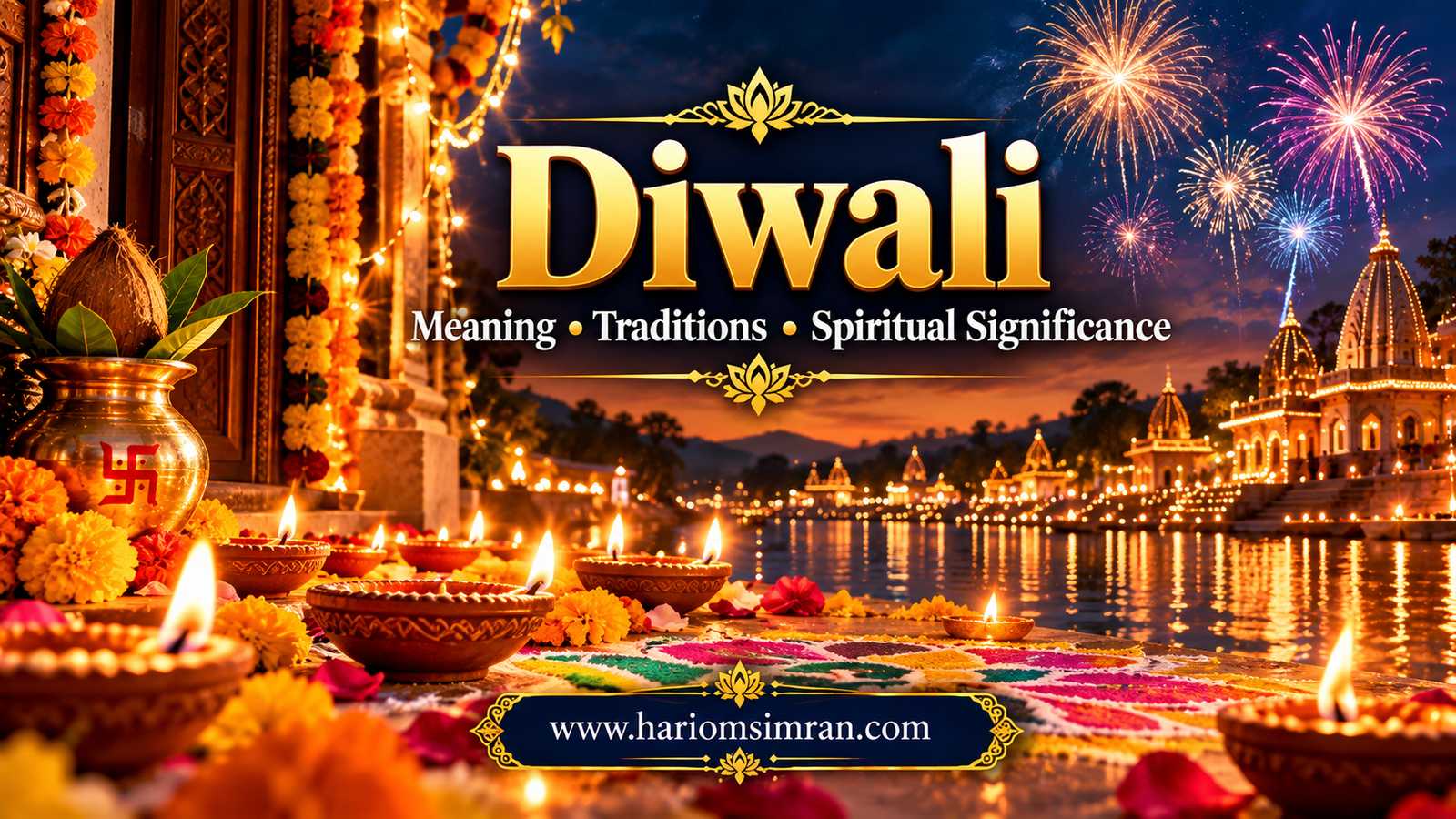
Diwali, also known as Deepavali, is one of the most widely celebrated festivals in Hinduism.
It is often called the Festival of Lights because homes, temples and public spaces are traditionally illuminated with diyas, lamps and decorative lights.
But Diwali is much more than a celebration of lights.
Across Hindu traditions, the festival is connected with themes of:
Light over darkness
Dharma over Adharma
Knowledge over ignorance
Hope over despair
Renewal and new beginnings
Divine grace and prosperity
Different regions and Hindu communities connect Diwali with different sacred stories, deities and customs.
For this reason, there is no single Diwali story or ritual followed identically by every Hindu family.
To understand the wider tradition behind these celebrations, explore Hinduism.
What Does the Word Diwali Mean?
The word Diwali comes from the Sanskrit term Deepavali.
It is commonly understood as:
Deepa — lamp or light
Avali — row or series
Deepavali therefore means:
“A row of lamps.”
The name reflects the traditional practice of lighting many small oil lamps, or diyas, during the festival.
These lamps carry both practical and spiritual symbolism.
A glowing diya can represent the light of wisdom, hope and Divine awareness overcoming darkness and ignorance.
When Is Diwali Celebrated?
The principal Diwali celebration is traditionally observed on Amavasya, the new-moon day associated with the Hindu month of Kartika in many calendar traditions.
Because the Hindu calendar is lunisolar, the Gregorian date changes every year.
The exact observance can also differ slightly depending on:
Location
Timezone
Sunrise and sunset
Tithi timing
Regional Panchang tradition
For this reason, HariOmSimran does not recommend treating one permanent Gregorian date as the date of Diwali every year.
Readers should use the Hindu Calendar for year- and location-specific festival dates.
Why Is Diwali Celebrated?
Diwali has several sacred meanings within Hinduism.
Different traditions connect the festival with different events.
Among the best-known are:
The return of Lord Rama to Ayodhya
Worship of Goddess Lakshmi
Lord Krishna and Narakasura traditions
Kali Puja in Shakta traditions
Govardhan Puja connected with Lord Krishna
These traditions do not contradict the importance of Diwali.
Instead, they show how one major Hindu festival developed rich meanings across regions and communities.
Lord Rama's Return to Ayodhya
In many North Indian traditions, Diwali is closely associated with Shri Rama's return to Ayodhya.
According to the Ramayana tradition, Rama returned after a long period of exile and after the defeat of Ravana.
Rama was accompanied by Sita and Lakshmana.
Popular devotional tradition describes the people of Ayodhya welcoming them with lamps and celebration.
The story has therefore become closely associated with:
The victory of Dharma
The return of righteous leadership
Hope after hardship
Light overcoming darkness
The Ramayana is one of Hinduism's most important sacred epics and forms part of the wider Hindu Scriptures tradition.
Goddess Lakshmi and Diwali
For many Hindu families, Goddess Lakshmi is central to the main evening of Diwali.
Lakshmi is associated with:
Prosperity
Abundance
Good fortune
Grace
Well-being
Auspiciousness
Homes and places of worship may be cleaned and decorated before Lakshmi Puja.
This physical cleaning also carries symbolic meaning.
A clean and peaceful home can represent creating a welcoming space for positivity, discipline and spiritual awareness.
Diwali should not, however, be reduced to a promise of financial wealth.
Lakshmi's significance in Hindu traditions extends beyond money to ideas of well-being, harmony, abundance and Divine grace.
Lord Vishnu and Goddess Lakshmi
Goddess Lakshmi is traditionally associated with Lord Vishnu as his Divine consort.
Vishnu represents preservation, Dharma and cosmic order in many Hindu traditions, while Lakshmi represents grace, prosperity and auspiciousness.
Their association brings together important themes of:
Dharma
Divine protection
Prosperity
Harmony
Responsibility
This also connects Diwali naturally with the wider Deities knowledge library on HariOmSimran.
Krishna and Narakasura
In some Hindu traditions, especially in parts of South India, Diwali or Naraka Chaturdashi is connected with the defeat of Narakasura.
Traditional accounts connect this victory with Lord Krishna, and in some tellings Satyabhama plays an important role.
The story symbolically represents the defeat of destructive forces and the restoration of Dharma.
Because traditions differ, HariOmSimran presents this as one important regional and devotional understanding of the Diwali period rather than as the single universal explanation of the festival.
Kali Puja and Diwali
In Bengal and some Shakta traditions, the night of Diwali is strongly associated with Goddess Kali.
Kali Puja may be performed on the Amavasya night.
Goddess Kali is connected with Divine Shakti and the destruction of ignorance and destructive forces.
This is an important example of how Diwali can have different devotional centers within different Hindu traditions.
For some families Lakshmi Puja is central.
For others Kali worship may hold greater importance.
Both belong to the wider diversity of Hindu tradition.
The Five Days of Diwali
Diwali is often understood as a multi-day festival rather than only one evening.
The exact names, sequence and customs can differ between regions, but a widely known five-day structure includes:
1. Dhanteras
Dhanteras begins the Diwali festival period in many traditions.
The day is associated with auspicious beginnings and is also linked with Lord Dhanvantari.
Many families clean their homes and prepare for the coming festival.
Buying useful household items, metals or other auspicious objects is also common in some communities.
The deeper significance of the day should not be reduced simply to shopping.
2. Naraka Chaturdashi
The second day is commonly known as Naraka Chaturdashi.
In some regions it is also called Choti Diwali.
It is particularly connected with traditions surrounding Krishna and Narakasura.
Customs vary significantly between regions.
3. Diwali and Lakshmi Puja
The main Diwali evening generally falls on Kartika Amavasya.
This is when many families:
Light diyas
Decorate their homes
Create Rangoli
Perform Lakshmi Puja
Offer prayers
Prepare sweets and Prasad
Visit family
Exchange greetings
The darkness of Amavasya makes the lighting of lamps especially powerful as a spiritual symbol.
4. Govardhan Puja
The day after Diwali is associated in many traditions with Govardhan Puja.
The festival remembers the sacred story of Shri Krishna lifting Govardhan Hill to protect the people of Vraja.
This tradition emphasizes Divine protection, devotion and respect for nature.
In some regions, the day may also be associated with different New Year traditions.
5. Bhai Dooj
Bhai Dooj celebrates the bond between brothers and sisters.
Different regions have different names and customs for this observance.
The festival emphasizes affection, family responsibility and mutual blessings.
Why Are Diyas Lit During Diwali?
Lighting diyas is one of the most recognizable traditions of Diwali.
A diya consists traditionally of a small lamp containing oil or ghee with a cotton wick.
Spiritually, light can represent:
Knowledge
Truth
Hope
Awareness
Dharma
Divine presence
Darkness can symbolically represent ignorance or confusion.
Therefore, lighting a diya can carry the deeper message:
Let the light of understanding overcome the darkness of ignorance.
Why Are Homes Cleaned Before Diwali?
Cleaning the home before Diwali is a widespread custom.
On a practical level, families prepare their homes for guests, Puja and celebrations.
Spiritually, cleaning can represent renewal.
It encourages people to reflect on what they may need to remove from their lives:
Negativity
Disorder
Old resentments
Carelessness
Unhelpful habits
The outer cleaning of the home can therefore become a reminder of inner purification as well.
What Is Rangoli?
Rangoli is a traditional decorative art created near entrances, courtyards or Puja areas.
Designs may be made using:
Colored powders
Rice flour
Flowers
Natural materials
Patterns vary greatly by region.
Rangoli is commonly associated with beauty, hospitality and auspiciousness.
During Diwali, it helps create a welcoming and sacred atmosphere in the home.
How Is Lakshmi Puja Performed on Diwali?
Lakshmi Puja traditions vary by family and region.
A typical household observance may include:
Cleaning the Puja area
Lighting diyas
Preparing flowers and offerings
Remembering Goddess Lakshmi
Offering sweets or Prasad
Reciting prayers or Mantras
Performing Aarti
Praying for well-being and harmony
Some traditions also worship Lord Ganesha along with Goddess Lakshmi.
HariOmSimran does not present one household Puja sequence as compulsory for every Hindu family.
People following a particular family tradition, temple or Guru should respect the practice of their own tradition.
Why Is Lord Ganesha Worshipped During Diwali?
In many families, Lord Ganesha is worshipped together with Goddess Lakshmi during Diwali Puja.
Ganesha is associated with:
Auspicious beginnings
Wisdom
Removal of obstacles
Lakshmi represents prosperity and Divine grace.
Their joint worship symbolically reminds devotees that prosperity should be accompanied by wisdom and responsible action.
Diwali Sweets and Prasad
Food plays an important role in Diwali celebrations.
Families often prepare or share sweets and festive dishes.
Common sweets vary widely by region and may include:
Laddoo
Barfi
Halwa
Kheer
Jalebi
Pedas
Other regional sweets
Some foods are offered during Puja and later shared as Prasad.
Sharing food with relatives, friends and neighbors also strengthens community relationships.
New Clothes and Diwali
Wearing new or freshly prepared clothes is another common Diwali custom.
New clothing can symbolize:
Fresh beginnings
Renewal
Celebration
Leaving the old behind
The meaning does not require expensive clothing.
The spiritual message of renewal is more important than luxury or social display.
Diwali and Charity
Diwali can also be a meaningful time for Dana and Seva.
The festival's message of light becomes more meaningful when celebrations include compassion toward others.
Families may choose to:
Share food
Support people in need
Help elderly people
Offer useful items
Participate in community Seva
Treat workers and helpers respectfully
From a spiritual perspective, prosperity becomes more meaningful when accompanied by generosity.
Diwali Traditions Across India
Diwali is celebrated differently across India and Hindu communities worldwide.
North India
Rama's return to Ayodhya and Lakshmi Puja are particularly prominent in many communities.
Gujarat
Diwali is strongly associated with Lakshmi worship, business traditions and the Gujarati New Year period.
Maharashtra
The multi-day Deepavali period includes several distinctive family and devotional customs.
South India
Naraka Chaturdashi traditions connected with Krishna and Narakasura are particularly important in several regions.
Bengal
Kali Puja is a major religious observance on Diwali night for many Shakta devotees.
Nepal
Deepavali-related celebrations form part of Tihar, which includes its own distinctive traditions.
These differences show why Hindu festivals should be explained with regional context rather than presented as completely uniform.
Is Diwali Only About Fireworks?
No.
Fireworks have become a visible part of modern Diwali celebrations in many places, but they do not define the spiritual meaning of the festival.
The deeper traditions of Diwali involve:
Diyas
Puja
Prayer
Family
Bhakti
Food
Generosity
Renewal
Spiritual reflection
Families may choose different ways to celebrate depending on local rules, environmental concerns, health considerations and community traditions.
Celebrating Diwali Responsibly
A meaningful Diwali celebration can also consider safety and respect for others.
Families may choose to:
Use diyas safely
Supervise children near flames
Respect local firework regulations
Consider elderly people and small children
Be mindful of animals
Reduce unnecessary waste
Avoid excessive noise
Dispose of decorations responsibly
Spiritual celebration and responsible behavior can exist together.
What Is the Spiritual Meaning of Diwali?
At its deepest level, Diwali invites reflection on light within human life.
The festival asks meaningful questions:
What darkness do we need to overcome?
What knowledge do we need to seek?
Where does Dharma require courage?
How can prosperity be used responsibly?
What negativity should we leave behind?
How can we bring light into someone else's life?
This is why the symbolism of Diwali remains powerful beyond lamps and decorations.
The festival can become a time for both outward celebration and inward reflection.
Diwali and Dharma
Many of the sacred stories associated with Diwali share a connection with Dharma.
Whether through Rama, Krishna, Lakshmi or other traditions, Diwali repeatedly returns to themes of order, responsibility, goodness and overcoming destructive forces.
To understand this important Hindu concept more deeply, explore Dharma.
Diwali in Hindu Scriptures and Sacred Traditions
Diwali is connected with multiple streams of Hindu sacred literature and later devotional traditions.
Stories associated with the festival connect with texts and traditions surrounding:
Ramayana
Puranas
Krishna traditions
Lakshmi traditions
Shakta traditions
Because Diwali developed across diverse communities, not every modern practice comes from one single scripture.
Understanding this distinction helps readers appreciate the festival without forcing its many traditions into one simplified origin story.
Explore the wider Hindu Scriptures library for the sacred texts behind Hindu traditions.
How Should We Understand Diwali Today?
Diwali continues to evolve as Hindu communities live across the world.
Modern celebrations may include electric lights, community events, digital greetings and large public gatherings.
Yet the essential spiritual ideas remain meaningful:
Illuminate life with knowledge.
Protect Dharma.
Value family and community.
Use prosperity responsibly.
Practice gratitude.
Share with others.
Begin again with hope.
These principles allow an ancient festival to remain meaningful for new generations.
Learn About Diwali With HariOmSimran
HariOmSimran aims to explain Hindu festivals as part of a connected knowledge system.
Diwali can be studied through its connections with:
Lord Rama
Lord Krishna
Lord Vishnu
Goddess Lakshmi
Lord Ganesha
Goddess Kali
Ramayana
Dharma
Govardhan Puja
Bhai Dooj
Dhanteras
Naraka Chaturdashi
Hindu Calendar
As these individual pages are added, they can form a strong internal knowledge cluster around Diwali.
For now, readers can explore Hinduism, Hindu Scriptures, Dharma and the Hindu Calendar.
Key Takeaway
Diwali is one of Hinduism's most important festivals and represents far more than lights and celebration.
Its traditions differ across Hindu communities, but recurring themes include:
Light over darkness
Knowledge over ignorance
Dharma over Adharma
Divine grace
Renewal
Family
Generosity
Spiritual reflection
The main Diwali observance is traditionally associated with Kartika Amavasya, while the wider festival period can include Dhanteras, Naraka Chaturdashi, Govardhan Puja and Bhai Dooj.
The many traditions surrounding Rama, Lakshmi, Krishna and Kali demonstrate the richness and diversity of Hindu religious culture.
Frequently Asked Questions
Diyas symbolize light overcoming darkness and knowledge overcoming ignorance. They are also traditionally used to create an auspicious atmosphere during Diwali worship and celebration.
The main Diwali celebration is generally observed on Kartika Amavasya. The exact Gregorian date varies each year and can differ slightly by location and Panchang tradition.
Diwali is a major Hindu festival associated with light, Dharma, renewal and Divine grace. Different traditions connect it with Lord Rama, Goddess Lakshmi, Lord Krishna, Goddess Kali and other sacred observances.
Goddess Lakshmi and Lord Ganesha are widely worshipped during Diwali in many traditions. Other regional traditions may emphasize Lord Rama, Lord Krishna or Goddess Kali.
A commonly recognized sequence includes Dhanteras, Naraka Chaturdashi, Diwali or Lakshmi Puja, Govardhan Puja and Bhai Dooj. Names and practices can vary by region.
No. Diwali traditions differ significantly across regions and Hindu communities. Rama traditions, Lakshmi Puja, Naraka Chaturdashi, Kali Puja and New Year customs may receive different emphasis depending on location and community.