


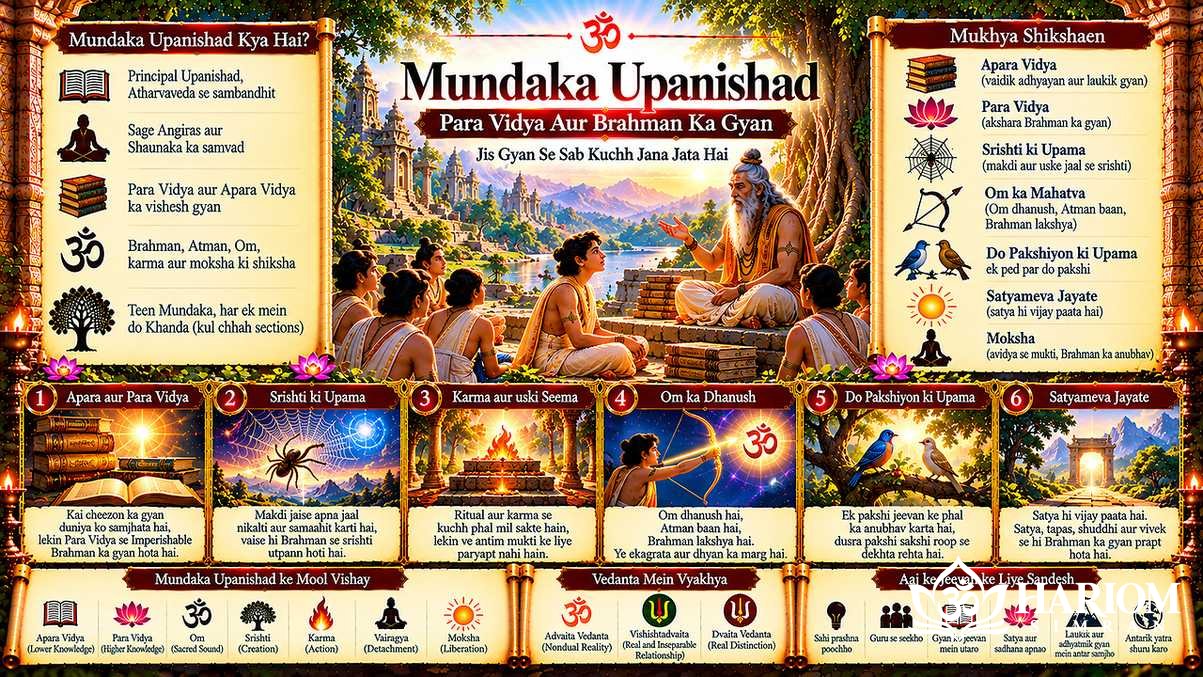
Mundaka Upanishad Hindu philosophy ke one of the most important questions se start hoti hai:
Aisa kya jana jaye jisse hum us deeper reality ko samajh sakein jo sabke peeche hai?
Ye question zyada information collect karne ke bare mein nahi hai.
Ye difference samajhne ke bare mein hai between:
Wo knowledge jo humein duniya ke bare mein batata hai
aur
Wo knowledge jo humein ultimate reality ke bare mein batata hai.
Mundaka Upanishad in do broad forms of knowledge ko kehti hai:
Apara Vidya
and
Para Vidya
Ye distinction entire text ka foundation ban jata hai.
Upanishad ordinary learning ko reject nahi karti.
Ye scriptures, language, ritual, traditional disciplines aur intellectual study ko useless nahi kehti.
Instead, wo deeper question poochti hai:
Kya bahut saari cheezon ka knowledge humein Imperishable Reality ka knowledge de sakta hai?
Isi inquiry ke through Mundaka Upanishad explore karti hai:
- Para Vidya
- Apara Vidya
- Brahman
- Atman
- Om
- Srishti
- Karma
- Ritual
- Vairagya
- Do Pakshiyon Ki Upama
- Satya
- Spiritual Realization
- Moksha
Mundaka Upanishad seeker ko external knowledge se deeper spiritual realization ki taraf guide karti hai.
Wider sacred tradition ko samajhne ke liye Hindu Scriptures explore karein.
Mundaka Upanishad Kya Hai?
Mundaka Upanishad principal ya Mukhya Upanishads mein se ek hai.
Ye Atharvaveda se associated hai.
Text specially famous hai apni teachings ke liye on:
Higher Aur Lower Knowledge
Brahman
Atman
Om
Spiritual Discipline
Ritual Ki Limits
Moksha
Mundaka Upanishad kuch extremely famous spiritual images bhi present karti hai.
Inmein include hain:
Ek Hi Ped Par Baithe Do Pakshi
aur
Om Dhanush Hai, Atman Baan Hai, Brahman Lakshya Hai
Famous expression Satyameva Jayate, broadly meaning Truth Alone Triumphs, bhi Mundaka Upanishad se aata hai.
Isse Mundaka Upanishad Kyun Kaha Jata Hai?
Word Mundaka ke exact interpretation ko different ways mein explain kiya gaya hai.
Kabhi ise shaving ya cutting away ke idea ke saath connect kiya jata hai, jise later interpreters ignorance ko remove karne ke symbolic meaning ke saath relate karte hain.
Lekin safest understanding ye hai ki Mundaka is Upanishad ka traditional title hai.
Spiritual level par text definitely false understanding aur ignorance ko cut through karne ki direction mein guide karti hai.
Mundaka Upanishad Aur Atharvaveda
Mundaka Upanishad Atharvaveda tradition ka part hai.
Prashna Upanishad ki tarah ye bhi Atharvavedic tradition ko strongly philosophical direction mein le jati hai.
Its major questions include:
Real Knowledge Kya Hai?
Brahman Kya Hai?
Universe Kaise Arise Hota Hai?
Kya Ritual Alone Final Liberation De Sakta Hai?
Individual Self Aur Ultimate Reality Ka Relationship Kya Hai?
Isi wajah se Mundaka Upanishad later Vedanta ko understand karne ke liye extremely important text hai.
Mundaka Upanishad Ka Structure
Text traditionally divided hai:
Three Mundakas
Har Mundaka mein hote hain:
Two Khandas
Is tarah total:
Six Sections
milte hain.
Text gradually move karti hai from:
Types of Knowledge
toward
Nature of Brahman
phir
Meditation Aur Self-Knowledge
aur finally
Liberation
Ye structure Mundaka Upanishad ko relatively systematic text banata hai.
Sacred Knowledge Ki Guru Parampara
Mundaka Upanishad start hoti hai sacred knowledge ki lineage ke saath.
Brahmavidya, yani Brahman ka knowledge, teachers ke through transmit hota hai.
Ye important Upanishadic principle reflect karta hai:
Spiritual Knowledge Disciplined Teaching Tradition Ke Through Preserve Hota Hai.
Knowledge ko casually invented idea ke roop mein treat nahi kiya jata.
Wo receive hota hai.
Understand hota hai.
Phir responsibly transmit kiya jata hai.
Ye wider Guru Shishya tradition se deeply connected hai.
Shaunaka Sage Angiras Ke Paas Jata Hai
Important dialogue start hota hai jab Shaunaka, jo respected householder ke roop mein describe kiya jata hai, Sage Angiras ke paas jata hai.
Shaunaka profound question poochta hai:
Aisa kya jana jaye jisse sab kuch jaanne ka deeper basis samajh aa jaye?
Question ka meaning ye nahi hai:
Main Har Individual Fact Kaise Jaanu?
Real question hai:
Kya koi deeper principle hai jo existence ke foundation ko explain karta hai?
Ye ordinary information-seeking se very different inquiry hai.
Do Prakar Ka Gyan
Angiras answer dete hain through one of the most famous teachings:
Apara Vidya
and
Para Vidya
Broadly:
Apara Vidya
Conventional, scriptural ya lower knowledge.
Para Vidya
Higher spiritual knowledge jiske through Imperishable Reality ko jana jata hai.
“Higher” aur “lower” words ko carefully understand karna chahiye.
Upanishad ordinary education ko worthless nahi kehti.
Wo difference banati hai between:
Forms Aur Systems Ka Knowledge
and
Ultimate Reality Ka Knowledge
Apara Vidya Kya Hai?
Apara Vidya traditional learning ke many areas include karti hai.
Text four Vedas ka reference deti hai:
Rigveda
Yajurveda
Samaveda
Atharvaveda
Saath hi Vedic study ke supporting disciplines bhi include hote hain.
Broadly ye areas ho sakte hain:
- Phonetics
- Ritual
- Grammar
- Etymology
- Meter
- Astronomy Ya Calendrical Knowledge
Ye sab important disciplines hain.
Ye language preserve karte hain.
Ritual knowledge preserve karte hain.
Sacred tradition ko maintain karte hain.
Lekin Mundaka Upanishad poochti hai:
Kya Ye Knowledge Directly Imperishable Reality Ko Reveal Karta Hai?
Kya Mundaka Upanishad Vedas Ko Reject Karti Hai?
Nahi.
Ye serious misunderstanding hogi.
Mundaka Upanishad khud Vedic Shruti tradition ka part hai.
Its purpose Vedas ko insult karna nahi hai.
Text distinction banati hai between:
Sacred Texts Ka Knowledge
and
Ultimate Reality Ka Direct Spiritual Understanding
Person scriptures ko deeply study kar sakta hai.
Lekin spiritual realization still deeper level demand kar sakti hai.
Ye text ke most important educational lessons mein se ek hai.
Para Vidya Kya Hai?
Para Vidya higher knowledge hai.
Ye us knowledge ko refer karti hai jiske through Akshara, yani Imperishable, ko jana jata hai.
Word Akshara ka meaning connected ho sakta hai:
Imperishable
Unchanging
Jo Decay Nahi Hota
Seeker many changing things ka knowledge lene se move karta hai toward deeper reality jo change ke cycle par depend nahi karti.
Information Aur Realization Mein Difference
Apara aur Para Vidya ke difference ko simple example se samjhein.
Person know kar sakta hai:
Hundreds of scriptures ke names.
Different Hindu traditions ka history.
Sanskrit terminology.
Ritual details.
Philosophical arguments.
Ye valuable learning hai.
Lekin Upanishad deeper question poochti hai:
Kya Ye Knowledge Self Aur Reality Ki Understanding Ko Transform Kar Raha Hai?
Ye difference hai:
Information
and
Realization
ke beech.
Kya Dono Types of Knowledge Important Hain?
Haan.
Ye conclude karna wrong hoga ki Apara Vidya useless hai.
Apara Vidya:
Mind Ko Prepare Kar Sakti Hai
Tradition Preserve Karti Hai
Language Aur Concepts Deti Hai
Context Provide Karti Hai
Lekin Mundaka Upanishad seeker ko scholarship aur final realization ke beech difference samajhne ko kehti hai.
Ye distinction modern spiritual education ke liye bhi very relevant hai.
Brahman Kya Hai?
Mundaka Upanishad Brahman ko deeper reality ke roop mein describe karti hai jisse existence arise hota hai.
Brahman ordinary objects mein se ek aur object nahi hai.
Text Brahman ko source ke roop mein point karti hai behind:
Life
Mind
World
Elements
Living Beings
Cosmic Order
Different Vedanta traditions later Brahman ko different ways mein interpret karti hain.
Brahman as the Imperishable
Mundaka Upanishad repeatedly Imperishable Reality ko emphasize karti hai.
Ordinary world mein everything change hota hai.
Bodies change hote hain.
Objects change hote hain.
Relationships change hoti hain.
Thoughts change hote hain.
Civilizations bhi change hoti hain.
Upanishadic question hai:
Kya koi aisi reality hai jo is constant change par depend nahi karti?
Ye Brahman ki search ka central question hai.
Srishti Kaise Arise Hoti Hai?
Mundaka Upanishad creation explain karne ke liye powerful analogies use karti hai.
Important examples:
Makdi Aur Uska Jaal
Dharti Se Ugte Paudhe
Living Body Se Ugte Baal
In analogies ka purpose ye show karna hai ki multiplicity ek deeper source se emerge hoti hai.
Makdi Aur Jaal Ki Upama
Spider analogy especially famous hai.
Makdi apna web khud se produce karti hai.
Web makdi par depend karta hai.
Makdi us web ko withdraw bhi kar sakti hai.
Analogy suggest karti hai:
Universe Apne Deeper Source Se Completely Separate Nahi Hai.
Existence Brahman se arise hota hai aur Brahman par depend karta hai.
Later philosophical traditions is relationship ko different ways mein explain karti hain.
Srishti Ka Material Source
Spider analogy deeper question raise karti hai:
Agar Brahman Reality Ka Source Hai, To Kya Universe Kisi Completely Separate Material Se Create Hota Hai?
Text ki imagery source aur manifestation ke beech intimate relationship indicate karti hai.
Ye later Vedanta debates mein important ban jata hai concerning:
Brahman
World
Individual Self
Brahman Aur Elements
Mundaka Upanishad cosmic principles aur elements ke emergence ka description deti hai.
Inmein include ho sakte hain:
Prana
Mind
Senses
Space
Air
Fire
Water
Earth
Is teaching ko modern physics ka substitute nahi samajhna chahiye.
Ye ancient spiritual cosmology ka part hai.
Central idea hai:
Differentiated Existence Ek Deeper Source Se Arise Hoti Hai.
Brahman Beyond Bhi Hai Aur Source Bhi
Mundaka Upanishad ek powerful tension maintain karti hai.
Brahman ordinary sensory description se beyond hai.
Lekin Brahman everything ka source bhi hai.
Isliye ultimate reality sirf distant nahi hai.
Spiritual inquiry gradually humein us deeper foundation ko recognize karne invite karti hai jo existence ke peeche present hai.
Ritual Ki Limits
Mundaka Upanishad ritual ke bare mein strong teaching deti hai.
Text ritual ko completely meaningless nahi kehti.
Lekin wo question karti hai idea ko ki:
Ritual Alone Final Liberation De Sakta Hai.
Ritual particular results provide kar sakta hai.
Lekin those results limited ho sakte hain.
Ritual Aur Temporary Results
Actions results produce karte hain.
Agar ritual particular heavenly result ke liye perform kiya jata hai, to wo result bhi cause and effect ke framework mein aata hai.
Jo result action se produce hota hai, wo conditioned hai.
Isi liye text question karti hai:
Kya Temporary Result Final Moksha Ke Equal Ho Sakta Hai?
Ye Upanishadic spirituality ka major development hai.
Kya Mundaka Upanishad Yajna Ko Oppose Karti Hai?
Nahi.
Text ko simplistic ritual rejection ke roop mein read nahi karna chahiye.
Ye same Vedic sacred world ka part hai.
Concern hai:
Ritual Ki Spiritual Limit
Question hai:
Kya Finite Action Infinite Liberation Produce Kar Sakta Hai?
Ye Karma aur Moksha ke relationship ka philosophical question hai.
Karma Aur Spiritual Limitation
Actions matter karte hain.
Good actions matter karte hain.
Ethical conduct matter karta hai.
Religious action bhi important ho sakta hai.
Lekin Mundaka Upanishad poochti hai:
Kya Action Alone Self Ke Bare Mein Deep Ignorance Ko Remove Kar Sakta Hai?
Isi wajah se higher knowledge later Vedanta mein central ban jata hai.
Temporary Results Se Dissatisfaction
Mundaka Upanishad describe karti hai seeker ko jo actions aur unke results ko carefully examine karta hai.
Wo recognize karta hai ki:
Temporary Results Permanent Freedom Nahi De Sakte.
Ye pessimism nahi hai.
Ye Viveka, yani discernment, ke similar spiritual understanding ko reflect karta hai.
Yahin se deeper spiritual search begin hoti hai.
Guru Ke Paas Jana
Upanishad teach karti hai ki serious seeker ko aise teacher ke paas jana chahiye jo:
Scriptural Knowledge Mein Grounded Ho
and
Brahman Ki Spiritual Understanding Mein Established Ho
Ye powerful standard hai.
Guru sirf religious vocabulary jaanne wala person nahi hai.
True guidance combines:
Knowledge
and
Realization
Humility Ka Role
Seeker humility ke saath Guru ke paas jata hai.
Kyun?
Because deeper learning openness demand karti hai.
Agar person pehle hi believe kare:
Mujhe Sab Pata Hai
to learning difficult ho jati hai.
Humility lack of intelligence nahi hai.
Humility ye recognize karna hai ki reality hamari present understanding se greater ho sakti hai.
Fire Imagery
Fire wider Vedic world mein important symbol hai.
Mundaka Upanishad ritual aur philosophical contexts mein fire imagery use karti hai.
Fire symbolize kar sakti hai:
Transformation
Energy
Light
Sacred Action
Lekin text gradually seeker ko external fire se deeper inner knowledge ki direction mein move karti hai.
Brahman as Light
Upanishad powerful imagery use karti hai of spiritual light.
Brahman ordinary physical illumination se beyond reality hai.
Famous teaching mein aisa realm describe hota hai jahan:
Sun
Moon
Stars
Lightning
apni independent light se ultimate reality ko illuminate nahi karte.
Instead, sab kuch deeper spiritual light ke through meaningful hota hai.
Ye physical brightness ka claim nahi hai.
Ye awareness aur existence ke source ka spiritual metaphor hai.
Inner Light Aur Consciousness
Light symbolize kar sakti hai:
Knowledge
Awareness
Truth
Spiritual Illumination
Seeker external light se deeper inner illumination ki taraf move karta hai.
Ye symbolism later Hindu spirituality mein extremely influential hua.
Om as the Bow
Mundaka Upanishad ki most famous metaphors mein se ek hai:
Om Dhanush Hai
Atman Baan Hai
Brahman Lakshya Hai
Ye meditation ka powerful image hai.
Seeker ko focused hona chahiye.
Arrow properly prepare hona chahiye.
Bow correctly use hona chahiye.
Target clear hona chahiye.
Bow and Arrow Analogy Ka Meaning
Analogy concentration aur spiritual focus sikhati hai.
Distracted archer target miss kar deta hai.
Similarly, distracted seeker spiritual ideas to know kar sakta hai, lekin deeper realization miss kar sakta hai.
Om contemplation ka support ban jata hai.
Atman arrow hai.
Brahman target hai.
Teaching emphasize karti hai:
Attention
Discipline
Meditation
Focused Inquiry
Wider sacred sound tradition ke liye Mantras explore karein.
Mundaka Upanishad Mein Om
Om ko magical sound ke roop mein present nahi kiya jata jo automatically Moksha guarantee kare.
Its value sacred contemplation mein hai.
Mind disciplined hona chahiye.
Teaching understand karni chahiye.
Practice sincerity ke saath honi chahiye.
Ye Om ko mechanical formula banne se bachata hai.
Ek Ped Par Do Pakshi
Another famous teaching describe karti hai:
Ek Hi Ped Par Baithe Do Pakshi
Dono closely connected hain.
Ek bird tree ke fruits eat karta hai.
Doosra bird observe karta hai, lekin fruit eat nahi karta.
Ye metaphor Upanishadic philosophy ka one of the most influential images ban gaya.
Fruit Khane Wala Pakshi
First bird fruits experience karta hai.
Kuch fruits pleasant hain.
Kuch unpleasant.
Ye bird individual being ko represent kar sakta hai jo experience ke andar involved hai.
Wo results taste karta hai of:
Action
Desire
Pleasure
Pain
Karma
Ye ordinary embodied existence ka symbol hai.
Dekhne Wala Pakshi
Second bird fruits eat nahi karta.
Wo witness karta hai.
Calm rehta hai.
Observe karta hai.
Ye deeper spiritual reality ki taraf point karta hai.
Different Vedanta traditions two-birds metaphor ko different ways mein interpret karti hain.
Kuch individual self aur Supreme Self ka relationship emphasize karti hain.
Kuch nondual philosophical framework mein explain karti hain.
Do Pakshiyon Ki Upama Important Kyun Hai?
Analogy deep question raise karti hai:
Kya Hum Sirf Pleasure Aur Pain Experience Karne Wale Being Hain, Ya Hamare Andar Deeper Dimension Bhi Hai?
Ordinary life mein hum experiences ke saath completely identify karte hain:
Main Happy Hoon.
Main Sad Hoon.
Main Successful Hoon.
Main Fail Ho Gaya.
Two-bird teaching seeker ko changing experiences ke behind deeper witness explore karne invite karti hai.
Experience Aur Witness
Witness ka concept emotional detachment in an unhealthy sense nahi hai.
Spiritual purpose hai:
Changing Experiences Ke Saath Absolute Identification Ko Reduce Karna.
Agar every emotion entire identity ban jaye, person unstable ho sakta hai.
Upanishad deeper center ki taraf point karti hai.
Tree as Life
Tree ko embodied existence ke field ka symbol samjha ja sakta hai.
Fruits experiences aur Karma ke results ko represent kar sakte hain.
Individual bird pleasure aur pain ke through move karta hai.
Witnessing bird deeper reality ke saath connected rehta hai.
Ye metaphor later Vedanta ke many philosophical discussions ka foundation banta hai.
Mundaka Upanishad Mein Atman
Text changing personality se attention ko Atman ki taraf move karti hai.
Deeper Self simply ye nahi hai:
Body
Thoughts
Emotions
Possessions
Social Identity
Atman ki search changing experience ke beyond deeper Self ko understand karne ki search hai.
Atman Aur Brahman
Atman aur Brahman ka relationship central philosophical issue hai.
Different Vedanta schools ise differently interpret karti hain.
Advaita Vedanta
Highest level par Atman aur Brahman ki nondual realization ko emphasize karta hai.
Vishishtadvaita Vedanta
Individual soul ko real aur Supreme Brahman par inseparably dependent samajhta hai.
Dvaita Vedanta
Individual soul aur Supreme Brahman ke beech real distinction maintain karta hai.
Mundaka Upanishad major Vedantic discussions ke liye important scripture hai.
Brahmavidya Kya Hai?
Brahmavidya ka meaning hai:
Brahman Ka Knowledge
Lekin ye only theoretical knowledge nahi hai.
Ye transformative understanding of ultimate reality ki taraf point karta hai.
Mundaka Upanishad Brahmavidya ko highest spiritual knowledge ke roop mein present karti hai.
Ye Para Vidya se closely connected hai.
Knowledge Ignorance Ko Kaise Remove Karta Hai?
Knowledge central kyun hai?
Because spiritual problem sirf possessions ki kami nahi hai.
Problem deeper misunderstanding ho sakti hai about:
Self
Reality
Life
Agar bondage ignorance se connected hai, to higher knowledge liberating ban sakta hai.
Ye Vedanta ke central foundations mein se ek hai.
Satyameva Jayate
Mundaka Upanishad ki one of the most famous expressions hai:
Satyameva Jayate
Broadly iska meaning hai:
Truth Alone Triumphs
Later ye India ka national motto bana.
Lekin Upanishadic context mein iska spiritual meaning much deeper hai.
Truth ko ultimate reality ke path ke saath connect kiya jata hai.
Satyameva Jayate Ka Spiritual Meaning
Teaching ye emphasize karti hai ki truth sirf social value nahi hai.
Truth spiritual progress ka part hai.
Falsehood distortion create karta hai.
Self-deception bondage create kar sakta hai.
Truth clarity support karta hai.
Brahman ki search therefore truth ke saath alignment demand karti hai.
Satya Aur Spiritual Life
Satya, yani truth, spiritual value ke roop mein extremely important hai.
Truthfulness sirf speech tak limited nahi hai.
Ye honesty include karti hai about:
Hamare Motives
Hamari Attachments
Hamare Fears
Hamari Knowledge
Hamari Limitations
Person ultimate truth seek nahi kar sakta while continuously deceiving himself or others.
Tapas in the Mundaka Upanishad
Text Tapas ko bhi value karti hai.
Tapas ko automatically extreme physical hardship nahi samajhna chahiye.
Broadly ye connected ho sakta hai:
Discipline
Focus
Self-Control
Dedicated Practice
Inner Refinement
Spiritual understanding sustained effort demand karti hai.
Brahmacharya Aur Discipline
Upanishadic path disciplined living ko importance deta hai.
Brahmacharya different traditions aur life contexts mein differently explain hota hai.
Broad educational meaning mein ye include kar sakta hai:
Self-Control
Responsible Conduct
Attention Ka Conservation
Spiritual Learning Ke Prati Dedication
Goal distraction reduce karna aur deeper inquiry support karna hai.
Hridaya Ki Granthiyan
Mundaka Upanishad ek powerful image use karti hai:
Heart Ki Knots Cut Ho Jati Hain
jab highest reality ka realization hota hai.
Ye knots symbolically represent kar sakti hain:
Ignorance
Attachment
Confusion
Spiritual Bondage
Liberation inner binding forces se release ke roop mein present hoti hai.
Doubts Dissolve Hote Hain
Text realization ke baad doubts ke resolution ki bhi baat karti hai.
Iska meaning ye nahi ki person universe ka every factual answer know karta hai.
Concern hai deepest existential doubts:
Main Kaun Hoon?
Reality Kya Hai?
Life Ka Source Kya Hai?
Freedom Kya Hai?
Spiritual realization in foundational questions ko transform karti hai.
Karma Aur Liberation
Mundaka Upanishad Karma aur knowledge ke relationship ko deepen karti hai.
Actions consequences produce karte hain.
Lekin liberation ko simply temporary action-result ke roop mein explain nahi kiya jata.
Text realization ki taraf point karti hai jo ordinary cause-and-effect rewards se beyond hai.
Isi wajah se Para Vidya central hai.
Mundaka Upanishad Mein Moksha
Moksha spiritual bondage se freedom hai.
Text liberation ko connect karti hai:
Brahman Ka Knowledge
Self-Realization
Satya
Purity
Disciplined Inquiry
Ignorance Se Freedom
Different Hindu traditions Moksha ki exact nature differently explain karti hain.
Liberation Life Mein Ya Death Ke Baad?
Later Vedanta traditions Upanishadic liberation ko different ways mein explain karti hain.
Kuch traditions realization while living ko emphasize karti hain.
Others soul ke final relationship with Supreme Reality par stronger focus kar sakti hain.
Isliye Mundaka Upanishad ko later interpretations ke context ke saath study karna useful hai.
Brahman Ko Jaanne Wala Sage
Upanishad Brahman-knower ko transformed person ke roop mein present karti hai.
Knowledge academic certificate nahi hai.
Realization narrow identity aur spiritual confusion ko transform karta hai.
Ye again difference highlight karta hai between:
Brahman Ke Bare Mein Learning
and
Brahman Ki Realization
Mundaka Upanishad Aur Vairagya
Text ka tone strongly contemplative hai aur Vairagya, yani attachment se freedom, ke themes se resonate karta hai.
Ye temporary rewards par exclusive dependence ko challenge karti hai.
Lekin iska meaning family, work ya society ko hate karna nahi hai.
Deeper concern hai:
Limited Results Ke Saath Attachment
Seeker realize karta hai ki temporary achievements deepest spiritual longing satisfy nahi kar sakte.
Householders Aur Spiritual Knowledge
Opening question poochne wale Shaunaka respected householder hain.
Ye important hai.
It reminds us ki deep philosophical inquiry sirf renunciants tak limited nahi hai.
Household life ke andar bhi serious spiritual search begin ho sakti hai.
Different Hindu traditions later householders aur renunciants ke liye different spiritual paths develop karti hain.
Kya Mundaka Upanishad Material Life Ko Reject Karti Hai?
Nahi.
Text material aur ritual achievements ko ultimate security samajhne ko question karti hai.
Human beings ko food, shelter, relationships aur responsibilities chahiye.
Concern practical life nahi hai.
Question hai:
Kya Temporary Things Permanent Spiritual Freedom De Sakti Hain?
Spiritual Pride Ka Danger
Apara Vidya sometimes pride create kar sakti hai.
Person many scriptures learn karke think kar sakta hai:
Maine Highest Knowledge Achieve Kar Liya.
Mundaka Upanishad is assumption ko challenge karti hai.
Scholarship valuable hai.
Lekin spiritual realization intellectual accumulation se deeper hai.
Knowledge Aur Character
True spiritual learning character ko transform karna chahiye.
Agar person Brahman study karke more arrogant ho raha hai, to teaching ka deeper purpose miss ho sakta hai.
Higher knowledge ko text connect karti hai:
Truth
Discipline
Clarity
Attachment Se Freedom
Knowledge ka purpose transformation hai.
Mundaka Upanishad Aur Yoga
Mundaka Upanishad complete Yoga manual nahi hai.
Lekin important contemplative ideas present karti hai related to:
Om
Concentration
Inner Awareness
Purification
Self-Knowledge
Ye Hindu meditation traditions ke development mein significant contribution hai.
Atman Par Dhyan
Bow-and-arrow metaphor meditation ka clear direction provide karti hai.
Seeker ka awareness focused hona chahiye.
Target external possession nahi hai.
Target deeper reality hai.
Meditation distraction se focused spiritual understanding ki taraf movement ban jati hai.
Mundaka Upanishad Aur Sacred Sound
Om Mundaka Upanishad ko wider Hindu sacred sound tradition se strongly connect karta hai.
Sacred sound decorative element nahi hai.
Ye contemplation ka support ban sakta hai.
Wider Mantra tradition ke liye Mantras explore karein.
Mundaka Upanishad Aur Divine Traditions
Text primarily philosophical language mein Brahman, Atman aur cosmic reality discuss karti hai.
Lekin ye wider Vedic sacred world ka part hai.
Later Hindu traditions Upanishadic philosophy ko different Divine theological understandings ke saath connect karti hain.
Wider traditions ke liye Deities explore karein.
Mundaka Upanishad Aur Vedanta
Mundaka Upanishad later Vedanta ke major sources mein se ek ban gayi.
Its teachings on:
Para Vidya
Brahman
Atman
Do Pakshi
Om
Moksha
extensive philosophical interpretation ka subject bani.
Different Vedanta schools text ko authoritative maanti hain, lekin metaphysical details differently interpret kar sakti hain.
Mundaka Upanishad Aur Advaita Vedanta
Advaita Vedanta Mundaka Upanishad ko major importance deta hai.
Advaita interpretations specially emphasize kar sakti hain:
Brahman as Ultimate Reality
Higher Self-Knowledge
Karma Ki Limits
Knowledge Se Freedom
Two-bird aur bow-arrow imagery Advaita interpretations mein significant hai.
Lekin Advaita only interpretive tradition nahi hai.
Other Vedanta Interpretations
Vishishtadvaita, Dvaita aur other traditions bhi Upanishadic teachings ko interpret karti hain.
Ye emphasize kar sakti hain:
Supreme Brahman
Individual Soul Ki Reality
Dependence on the Divine
Devotion
Difference and Relationship
HariOmSimran par ye philosophical diversity clearly acknowledge karna important hai.
Kya Mundaka Upanishad Religion Ke Against Hai?
Nahi.
Text itself sacred scripture hai.
Criticism religion ke against nahi hai.
Concern hai:
Religious Actions Ki Limits Ko Samajhna
Upanishad poochti hai:
Kya Ritual Without Deeper Knowledge Final Liberation De Sakta Hai?
Ye Vedic tradition ke andar spiritual self-examination hai.
Kya Apara Vidya Bad Hai?
Nahi.
Apara Vidya important learning include karti hai.
Problem tab hoti hai jab limited knowledge ko final realization samajh liya jaye.
Language.
Scripture.
Ritual.
Intellectual study.
Ye sab seeker ko prepare kar sakte hain.
Lekin Upanishad seeker ko Para Vidya ki taraf further move karne ko kehti hai.
Kya Para Vidya Books Se Seekhi Ja Sakti Hai?
Books guide kar sakti hain.
Teachers explain kar sakte hain.
Scriptures direction de sakti hain.
Lekin Para Vidya sirf memorization nahi hai.
Its deepest meaning Imperishable Reality ki realization se connected hai.
Isi liye study aur transformation dono important hain.
Kya Om Se Automatically Moksha Milta Hai?
Nahi.
Mundaka Upanishad Om ko profound contemplation support ke roop mein use karti hai.
Ye mechanical guarantee nahi hai.
Traditional spiritual path discipline, preparation, understanding aur realization ko importance deta hai.
Kya Do Pakshiyon Ki Story Literal Hai?
Ye primarily philosophical metaphor hai.
Iska purpose explain karna hai relationship between:
Experience
Individual Self
Witness
Ultimate Reality
Different Vedanta schools metaphor ko differently interpret karti hain.
Mundaka Upanishad Ke Common Misunderstandings
Misunderstanding 1: Apara Vidya Useless Hai
Nahi.
Ye valuable knowledge hai, lekin by itself Imperishable Reality ki direct realization nahi hai.
Misunderstanding 2: Mundaka Upanishad Vedas Ko Reject Karti Hai
Nahi.
Ye khud Vedic Shruti tradition ka part hai.
Misunderstanding 3: Ritual Ka Koi Value Nahi Hai
Nahi.
Text question karti hai ki ritual alone final liberation de sakta hai ya nahi.
Misunderstanding 4: Om Automatically Moksha Deta Hai
Nahi.
Om focused spiritual contemplation ka sacred support hai, guaranteed mechanical result nahi.
Misunderstanding 5: Do Pakshiyon Ki Sirf Ek Interpretation Hai
Nahi.
Different Vedanta traditions metaphor ko different philosophical frameworks ke through interpret karti hain.
Modern Readers Mundaka Upanishad Se Kya Seekh Sakte Hain?
Mundaka Upanishad ke questions aaj ke information-rich world mein especially relevant hain:
Kitni Information Enough Hai?
Kya Education Automatically Wisdom Create Karti Hai?
Kya Success Existential Insecurity Remove Kar Sakti Hai?
Kya Temporary Rewards Deepest Human Questions Ka Answer Hain?
Truth Ke Bare Mein Jaanne Aur Truth Ko Realize Karne Mein Kya Difference Hai?
Kya Hum Experiences Ko Observe Kar Sakte Hain Bina Unse Completely Controlled Hue?
Education Aur Wisdom
Modern world mein enormous amount of information instantly available hai.
Lekin Mundaka Upanishad crucial distinction banati hai:
Information Wisdom Ke Equal Nahi Hai.
Person thousands of facts know kar sakta hai aur phir bhi apne deeper Self ko na samjhe.
Isi wajah se Mundaka Upanishad modern spiritual education ke liye powerful text hai.
Success Aur Fulfillment
Text hamare success ke idea ko bhi question karti hai.
Person achieve kar sakta hai:
Wealth
Status
Recognition
Academic Knowledge
Professional Success
Religious Merit
Lekin deeper question remain karta hai:
Kya Ye Fear, Ignorance Aur Inner Bondage Remove Karte Hain?
Mundaka Upanishad achievement aur liberation ko same thing nahi maanti.
Mundaka Upanishad Aaj Bhi Important Kyun Hai?
Mundaka Upanishad spiritual life ka one of the most fundamental questions raise karti hai:
Kaunsa Gyan Human Being Ko Truly Free Kar Sakta Hai?
Iska answer anti-education nahi hai.
Actually ye deeper education ka call hai.
Seeker move karta hai:
Apara Vidya
se
Para Vidya
From:
Information
to
Realization
From:
Temporary Results
to
The Imperishable
From:
Life Ke Fruits Experience Karna
to
Deeper Witness Ko Recognize Karna
Isi journey ki wajah se Mundaka Upanishad Upanishadic tradition ki one of the most powerful texts hai.
HariOmSimran Ke Saath Upanishadic Wisdom Explore Karein
HariOmSimran apne Scripture section ko structured aur interconnected Hindu knowledge journey ke roop mein develop kar raha hai.
Continue exploring:
Upanishads series ka next detailed article hoga:
Mandukya Upanishad: Om Aur Consciousness Ki Chaar Avasthayen
Uske baad systematically continue karenge:
Taittiriya Upanishad
Aitareya Upanishad
Chandogya Upanishad
Brihadaranyaka Upanishad
aur later other important Upanishadic texts.
Learn • Explore • Understand • Preserve
Key Takeaway
Mundaka Upanishad principal Upanishads mein se ek hai aur Atharvaveda se associated hai.
Its most famous teaching distinguish karti hai:
Apara Vidya, yani scriptures aur traditional disciplines ka knowledge,
and
Para Vidya, yani wo higher knowledge jiske through Imperishable Reality ko realize kiya jata hai.
Mundaka Upanishad powerful spiritual images use karti hai:
Makdi Aur Uska Jaal
Om as the Bow
Atman as the Arrow
Brahman as the Target
Ek Ped Par Baithe Do Pakshi
Text sikhati hai ki ritual, scholarship aur external achievements valuable ho sakte hain, lekin unhe final spiritual realization samajhna correct nahi hai.
Seeker ko many things ke knowledge se deeper reality ke understanding ki taraf move karna hai.
Key Teachings
This scripture reveals profound wisdom and guidance for our spiritual journey. Below are the key teachings and principles derived from this sacred text.
Core Principles
These teachings provide guidance for living a life of faith, compassion, and spiritual growth.
- Spiritual Growth
- Divine Wisdom
- Sacred Teachings
- Faith Journey

Study Resources
Explore these resources to deepen your understanding of this scripture and apply its teachings to your daily life.
📖 Study Guide
Comprehensive study materials to help you understand the context, meaning, and application of this scripture.
🙏 Reflection Questions
Thought-provoking questions to help you reflect on the teachings and apply them to your personal spiritual journey.
📝 Journal Prompts
Guided journaling prompts to help you document your insights, prayers, and spiritual growth.
👥 Discussion Topics
Engaging discussion topics for group study and fellowship, fostering deeper understanding and community.
Frequently Asked Questions
Mundaka Upanishad Atharvaveda se associated principal Upanishad hai. Ye higher aur lower knowledge, Brahman, Atman, Om, Karma, spiritual realization aur Moksha ko explore karti hai.
Apara Vidya conventional, scriptural aur traditional learning ko refer karti hai. Para Vidya higher spiritual knowledge hai jiske through Imperishable Reality ko jana ya realize kiya jata hai.
Nahi. Ye khud Vedic Shruti tradition ka part hai. Text scripture ke knowledge aur ultimate reality ki direct realization ke beech distinction banati hai.
Ek bird life ke fruits experience karta hai, jabki doosra witness ke roop mein dekhta hai. Ye individual experience, deeper Self aur ultimate reality ke relationship ko explore karne ka metaphor hai. Different Vedanta traditions ise differently interpret karti hain.
Mundaka Upanishad Om ko bow, Atman ko arrow aur Brahman ko target se compare karti hai. Ye metaphor focused meditation, discipline aur single-pointed spiritual inquiry ko emphasize karta hai.
Mundaka Upanishad important hai because ye information aur realization ke beech distinction banati hai aur sikhati hai ki final liberation temporary results se nahi, deeper knowledge of Brahman aur Self-realization se connected hai.